


135 Rosewood Centre Dr
Holly Springs, NC 27540


Why an Eye Exam Is Important After a Concussion: Vision Problems Every Parent and Adult Should Know
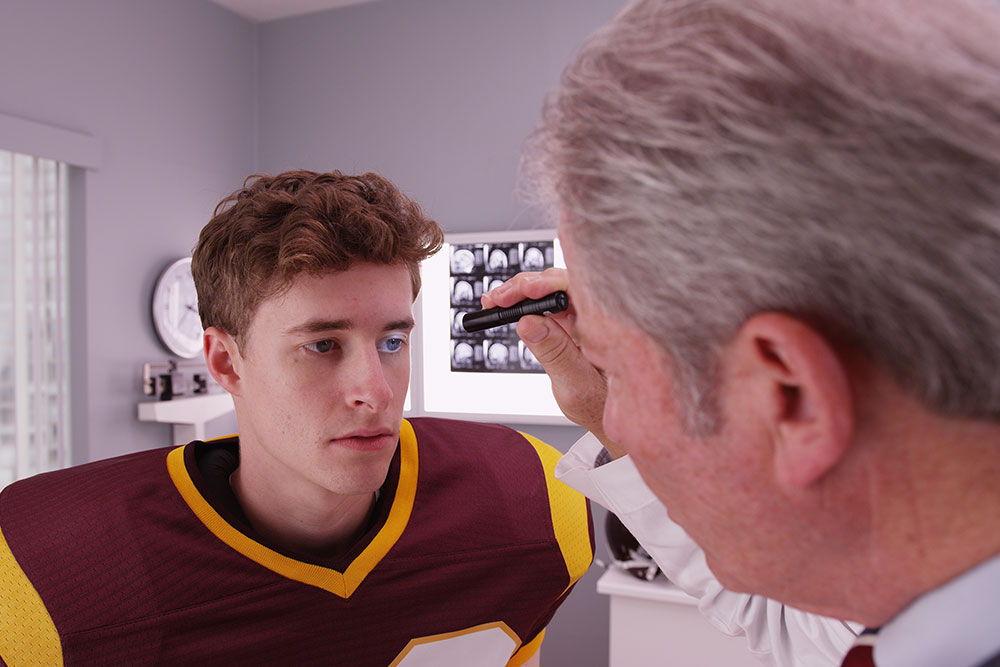
A concussion can affect much more than your head. Learn how to recognize hidden vision problems after a concussion, why 20/20 eyesight doesn't always mean your visual system is functioning properly, and when to seek a comprehensive eye examination.
A concussion can happen in an instant—during a sports game, a fall on the playground, a car accident, or even a seemingly minor bump to the head. While headaches, dizziness, and memory problems are commonly associated with concussions, many people overlook another important area that can be affected: vision.
You might be surprised to learn that someone can have perfect 20/20 eyesight and still experience significant vision-related difficulties following a concussion.
At Family Eye Wellness in Holly Springs, North Carolina, we believe that understanding how the eyes and brain work together is an important part of identifying visual problems that might otherwise go unnoticed.
Whether you're a parent monitoring your child after a fall, an athlete recovering from a sports injury, or an adult experiencing unexplained symptoms after a concussion, knowing what to look for can make a meaningful difference.
How Can a Concussion Affect Your Vision?
A concussion is a type of traumatic brain injury (TBI) caused by a sudden impact or movement that disrupts normal brain function.
Although your eyes may not be physically injured, the areas of your brain responsible for controlling eye movements, focusing, coordination, and processing visual information can be affected.
Your visual system performs many tasks beyond simply recognizing letters on an eye chart.
For example, your eyes and brain must work together to:
- Track moving objects smoothly.
- Shift your gaze between different objects.
- Focus clearly when reading or looking at a screen.
- Coordinate both eyes to maintain single vision.
- Judge distances and depth.
- Process visual information while your head or body is moving.
Following a concussion, one or more of these abilities may become less efficient.
This is why passing a basic vision screening or being told you have 20/20 vision does not necessarily rule out a concussion-related visual problem.
10 Vision-Related Symptoms to Watch for After a Concussion
Some visual symptoms appear immediately after an injury. Others become noticeable hours or days later, particularly when someone returns to reading, school, work, or screen use.
Here are 10 important signs to recognize:
1. Blurred Vision
Objects may appear blurry at near or far distances, or vision may fluctuate throughout the day.
2. Double Vision (Diplopia)
A person may see two images of a single object, especially while reading or concentrating on something nearby.
New double vision following a head injury requires urgent medical assessment because it can sometimes indicate a more serious problem.
3. Difficulty Reading or Losing Your Place
Reading may suddenly become exhausting. Words might appear to move, lines may be skipped, or the person may need to reread sentences repeatedly.
4. Headaches During Visual Activities
Headaches may worsen after reading, using a computer, completing homework, or performing other visually demanding tasks.
5. Sensitivity to Light (Photophobia)
Normal indoor lighting, sunlight, or electronic screens may suddenly feel uncomfortable.
6. Eye Strain or Fatigue
The eyes may feel tired or uncomfortable after activities that were previously easy.
7. Difficulty Focusing Between Near and Far Objects
Looking from a notebook to a classroom board, or from a phone to a distant object, may cause temporary blurriness or discomfort.
8. Dizziness or Motion Sensitivity
Busy environments, scrolling screens, moving vehicles, or grocery store aisles may trigger dizziness, nausea, or discomfort.
9. Difficulty Tracking Moving Objects
Following a moving ball, reading across a page, or tracking traffic may become more difficult.
10. Poor Depth Perception or Spatial Awareness
A person may misjudge distances, bump into objects, or feel less confident navigating stairs and unfamiliar environments.
Important: These symptoms can have several possible causes. They do not automatically mean someone has a particular eye condition, but new or persistent symptoms after a concussion deserve medical attention.
Signs of Vision Problems After a Concussion in Children
Children do not always recognize that their vision has changed. Younger children may not have the vocabulary to describe blurry vision, double vision, or difficulty focusing.
Instead, parents and teachers may notice changes in behavior, school performance, or participation in everyday activities.
Signs Parents and Teachers Should Watch For
- Suddenly avoiding reading, coloring, or homework.
- Complaining that reading makes their head hurt.
- Covering or closing one eye while reading.
- Losing their place or using a finger more often to follow words.
- Taking much longer than usual to complete assignments.
- Becoming frustrated, irritable, or emotional during schoolwork.
- Complaining that classroom lights are too bright.
- Feeling dizzy or nauseated during car rides or physical activities.
- Having difficulty catching a ball or participating in sports.
- Appearing unusually clumsy or struggling with coordination.
For younger children, watch for changes such as increased crying, reduced interest in play, changes in feeding or sleeping, or unusual unsteadiness after an injury.
A Real-Life Example: When a Child Suddenly Struggles With Reading
Imagine a child who previously enjoyed reading but begins complaining about headaches after a playground fall.
Their teacher notices that they lose their place frequently, take longer to finish assignments, and become frustrated when asked to read.
It might be tempting to attribute these changes to poor concentration, tiredness, or a lack of motivation.
However, the child could be experiencing a concussion-related problem with eye tracking, focusing, or eye coordination.
The key takeaway for parents: A sudden change in reading comfort, school performance, or visual behavior following a head injury should never be dismissed without appropriate evaluation.
Not every reading or concentration difficulty is caused by vision. A comprehensive concussion assessment helps identify the different factors that may be contributing.
Signs of Concussion-Related Vision Problems in Adults
Adults may experience many of the same symptoms as children, but the difficulties often become most noticeable during work, driving, or everyday responsibilities.
For example, an adult recovering from a concussion might notice:
- Increased headaches after working at a computer.
- Difficulty concentrating during meetings or while reading.
- Blurry vision after prolonged screen time.
- Dizziness while walking through busy stores.
- Difficulty switching focus between a computer monitor and paperwork.
- Eye strain after activities that previously caused no discomfort.
- Trouble tolerating bright lights or visually busy environments.
- Feeling overwhelmed by movement or visual stimulation.
Some people describe these experiences as brain fog or mental exhaustion.
While concussion-related fatigue and concentration difficulties can have several causes, visual dysfunction may be one contributing factor.
If these symptoms develop after a head injury, discuss them with your healthcare provider rather than assuming they are simply part of getting older or being stressed.
What Eye Conditions Can Develop After a Concussion?
A concussion can disrupt several aspects of visual function. Some of the conditions and difficulties that may be identified include:
Convergence Insufficiency
Convergence is the ability of both eyes to turn inward together when looking at something nearby.
When convergence is impaired, reading and other close-up activities may cause headaches, blurred vision, eye strain, or double vision.
Accommodative Dysfunction (Eye Focusing Problems)
Accommodation allows the eyes to adjust focus between near and distant objects.
After a concussion, a person may have difficulty maintaining clear near vision or switching focus efficiently between distances.
Binocular Vision Dysfunction
Binocular vision refers to how the two eyes coordinate to create a single, comfortable visual experience.
Disruption of this coordination can contribute to double vision, eye strain, headaches, and difficulty with depth perception.
Oculomotor Dysfunction (Eye Tracking Problems)
Eye tracking involves making controlled eye movements, including following moving objects and shifting accurately between targets.
Problems with these movements may make reading, sports, and other visual tasks more challenging.
Photophobia (Light Sensitivity)
Some individuals develop increased sensitivity to natural or artificial light following a concussion.
Light sensitivity may occur alongside headaches, migraines, or other post-concussion symptoms.
Visual Motion Sensitivity and Vestibular-Ocular Problems
Vision works closely with the vestibular system, which helps maintain balance and stabilize vision during movement.
When these systems are disrupted, activities involving motion or visually complex surroundings can become uncomfortable.
Double Vision (Diplopia)
Double vision can develop when the eyes are not properly aligned or coordinated, although it can also result from neurological or other medical problems.
New double vision after a head injury should be assessed urgently.
Related reading: Learn more about double vision, binocular vision problems, and how vision therapy may help certain eye coordination difficulties.
Why Is an Eye Exam Important After a Concussion?
An important distinction is that seeing clearly is not the same as seeing comfortably and efficiently.
A standard vision screening may measure how well someone recognizes letters at a distance, but it may not fully evaluate how the eyes work together during reading, focusing, or movement.
A comprehensive eye examination can help assess eye health and visual function. When appropriate, additional testing can examine specific abilities that may be affected after a concussion.
Depending on the patient's symptoms and examination findings, testing may include:
- Visual acuity: How clearly each eye sees.
- Eye alignment and coordination: Whether the eyes work together appropriately.
- Convergence: How effectively both eyes turn inward for near tasks.
- Accommodation: How well the eyes focus and change focus.
- Eye movements: How accurately the eyes track and shift between targets.
- Binocular vision: How the two eyes coordinate to maintain comfortable single vision.
- Ocular health: Examination for eye conditions or signs that require further medical investigation.
Additional functional or binocular vision testing may be recommended when symptoms or initial findings suggest a problem.
A concussion-related eye examination is not a replacement for medical concussion evaluation. Rather, it can be an important part of coordinated care when visual symptoms are present.
When Should You Schedule an Eye Exam After a Concussion?
Anyone with a suspected concussion should receive prompt assessment from an appropriate healthcare professional, even if they did not lose consciousness.
An eye examination is particularly worth discussing with your healthcare provider if:
- Blurry vision, headaches, or eye strain develop after the injury.
- Reading or computer use becomes uncomfortable.
- Your child begins struggling with schoolwork after a concussion.
- You notice new problems with focusing or eye coordination.
- Dizziness or motion sensitivity occurs during visual activities.
- Visual symptoms continue as the person returns to normal activities.
You do not need to wait until symptoms have lasted for months to ask about visual concerns.
The timing and type of eye evaluation should be guided by the individual's symptoms, medical condition, and concussion recovery plan.
When Is a Concussion an Emergency?
Some symptoms may indicate a more serious brain injury.
Call 911 or seek emergency medical care immediately after a head injury if someone develops:
- A worsening headache that does not go away.
- Repeated vomiting.
- Seizures or convulsions.
- Increasing confusion, unusual behavior, or agitation.
- Weakness, numbness, or slurred speech.
- Difficulty waking up or staying awake.
- One pupil that appears larger than the other.
- New double vision.
For infants and young children, inconsolable crying or refusal to feed after a head injury can also be a danger sign.
Do not wait for an optometry appointment if these symptoms occur.
Can Vision Therapy Help With Vision Problems After a Concussion?
For some patients, a concussion may cause or worsen specific eye coordination, tracking, or focusing problems.
Depending on the diagnosis, treatment options may include updated prescription lenses, carefully selected optical interventions, supervised vision therapy, or referral to other healthcare professionals.
Vision therapy is a personalized program that uses structured visual activities to address certain functional vision problems.
For example, treatment may be considered for selected patients with convergence insufficiency or other diagnosed binocular vision difficulties.
However, vision therapy is not necessary for everyone who experiences a concussion, and the scientific evidence for treating post-concussion visual dysfunction varies by condition and treatment approach.
A thorough evaluation helps determine whether vision therapy is appropriate or whether another form of care would be more beneficial.
How Family Eye Wellness Can Help
At Family Eye Wellness in Holly Springs, North Carolina, we understand that vision involves much more than reading the letters on an eye chart.
Dr. Patel takes a personalized approach to eye care, considering both eye health and the way the visual system functions during everyday activities.
For children and adults experiencing visual difficulties following a concussion, our practice offers comprehensive eye examinations and functional/binocular vision evaluations when indicated.
Our Approach to Post-Concussion Visual Concerns
1. Understanding Your Symptoms
We begin by listening to your concerns, reviewing relevant medical history, and understanding how your symptoms affect daily activities such as reading, schoolwork, screen use, or work.
2. Evaluating Eye Health and Visual Function
We examine your eye health and assess relevant visual abilities, with additional functional testing recommended when appropriate.
3. Identifying Potential Visual Problems
We look for issues involving eye teaming, focusing, tracking, and other aspects of visual function that may contribute to your symptoms.
4. Developing Individualized Recommendations
Depending on the findings, recommendations may include prescription lenses, further testing, vision therapy for suitable diagnosed conditions, or referral to other specialists.
5. Supporting Coordinated Care
Concussion recovery can involve several healthcare professionals. We encourage appropriate communication with your medical team to support a coordinated approach to recovery.
Our goal is to help patients and families better understand their visual symptoms, identify problems that may have been overlooked, and make informed decisions about appropriate care.
Frequently Asked Questions About Concussions and Vision
1. Can a concussion cause vision problems even if I have 20/20 eyesight?
Yes. A person may see letters clearly on an eye chart but still experience problems with eye tracking, focusing, convergence, or eye coordination. These visual abilities are not fully assessed by a basic visual acuity screening.
2. Should I get an eye exam after a concussion if I have no vision symptoms?
Not everyone requires a specialized eye examination after a concussion. However, everyone with a suspected concussion should receive appropriate medical assessment. An eye exam may be recommended if visual symptoms appear, examination findings suggest a problem, or your healthcare provider advises one.
3. How soon after a concussion should I have my eyes checked?
Seek prompt medical evaluation for a suspected concussion. If you experience visual symptoms, discuss them with your healthcare provider early in recovery. New double vision or other neurological warning signs require urgent or emergency medical evaluation.
4. Can a concussion cause blurry vision days or weeks later?
Yes. Some symptoms are not immediately noticeable and may become apparent when someone resumes reading, computer work, school, or other visually demanding activities. New or worsening symptoms should be discussed with a healthcare professional.
5. Can a concussion affect a child's reading ability?
Yes. Concussion-related problems with focusing, eye tracking, or eye coordination may make reading uncomfortable or difficult. However, fatigue, headaches, and cognitive symptoms can also interfere with reading, so a broader evaluation may be needed.
6. Can a concussion cause double vision?
Yes. Double vision may occur because of problems involving eye alignment, eye movements, or neurological function. Because new double vision after a head injury can be a warning sign of serious injury, seek emergency medical assessment.
7. Why do screens give me headaches after a concussion?
Screens require sustained focusing, eye movements, and visual attention. Brightness, motion, and prolonged visual concentration can aggravate concussion symptoms. Eye focusing or coordination difficulties may also contribute.
8. Can concussion-related vision problems go away on their own?
Yes. Many concussion symptoms improve as the brain recovers, often within days or weeks. However, persistent or worsening visual symptoms should be evaluated rather than ignored.
9. Can vision therapy help after a concussion?
Vision therapy may be considered for certain diagnosed functional vision problems, such as some forms of convergence insufficiency. Its suitability depends on individual examination findings, and evidence for its effectiveness specifically after concussion remains limited for several approaches.
10. What is the difference between a regular eye exam and a functional vision evaluation?
A comprehensive eye examination assesses eyesight, prescription needs, and eye health, and may include basic testing of eye coordination and focusing. A functional vision evaluation provides more detailed assessment of skills such as eye teaming, tracking, and focusing when clinically indicated.
11. Can a concussion cause dizziness even when my eyesight seems normal?
Yes. Concussions can affect the vestibular and visual systems, which work together to support balance and stable vision during movement. Dizziness may also have other causes and should be assessed appropriately.
12. How can parents tell if a child has vision problems after a concussion?
Watch for new headaches during reading, avoidance of schoolwork, closing one eye, complaints of blurry vision, increased light sensitivity, dizziness, or sudden changes in visual activities. Younger children may show behavioral changes instead of clearly describing their symptoms.
13. Do I need a referral to visit Family Eye Wellness?
Contact our office to discuss your symptoms, the appropriate type of examination, and whether any medical records or referrals would be helpful before scheduling.
14. Where can I get an eye exam for post-concussion vision problems near Holly Springs, NC?
Family Eye Wellness provides comprehensive eye care and functional vision evaluations for children and adults in Holly Springs, North Carolina, and surrounding communities. Our team can help determine the appropriate evaluation for your visual concerns.
Don't Overlook Vision After a Concussion
A concussion can affect far more than memory, balance, and concentration. It may also disrupt the visual skills needed for reading, learning, working, and everyday activities.
For children, these difficulties may appear as frustration with schoolwork or changes in behavior. For adults, they may show up as headaches, eye strain, dizziness, or difficulty using a computer.
Recognizing these signs is an important first step.
If you or your child has experienced a concussion and is noticing changes in vision or visual comfort, an appropriate eye examination may help identify contributing visual problems and guide next steps.
Schedule an Eye Examination at Family Eye Wellness
At Family Eye Wellness, we take the time to understand your concerns and look beyond basic eyesight to assess how your visual system functions.
© 2026 Family Eye Wellness. All rights Reserved - Accessibility Statement - Privacy Policy - Sitemap
Powered by
